Printable Mini Nonogram Worksheets
Build 5×5 picture logic puzzles and answer keys for A4 or US Letter.
Quick start
Apply a common puzzle, layout, and output configuration in one step.
Custom
Print settings
beginner · First pictures · 1 puzzles · A4 · 1/page
Print preview
Output summary
- Puzzle count
- 1 puzzle
- Puzzle pages
- 1 puzzle page
- Answer pages
- 1 answer page
- Total pages
- 2 pages
- Paper
- A4 · Portrait
- Puzzles per page
- 1
- Appearance
- Color
Print & download
Wait for the current validated preview before output.
Create printable Nonograms in three steps
Choose the learning goal
Pick a real 5×5 level, collection, and same-level or progressive set.
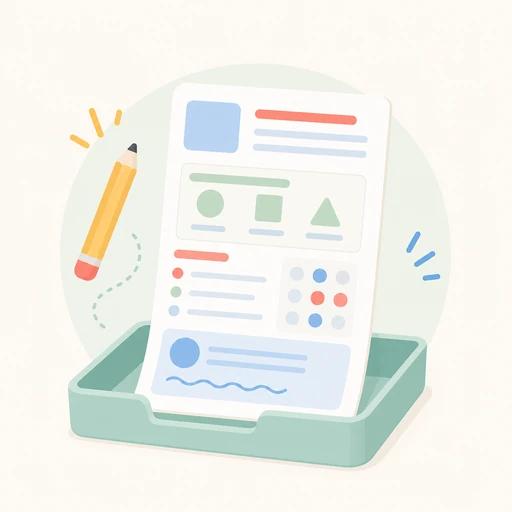
Inspect the real pages
Check paper, density, worked example, answer key, and output style in the vector preview.
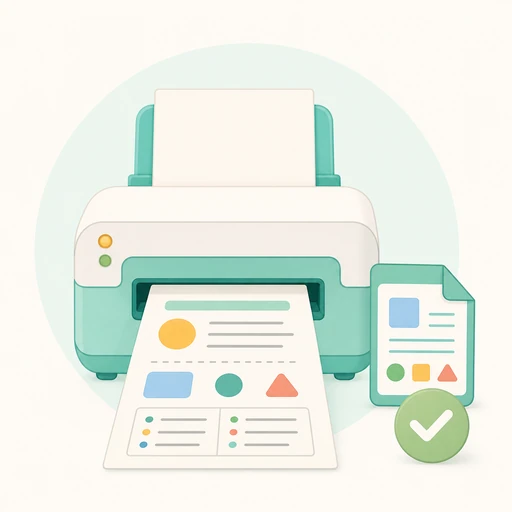
Print or save PDF
Output the current validated Document plan for classroom or home practice.
See the clue logic
Turn number clues into one certain picture
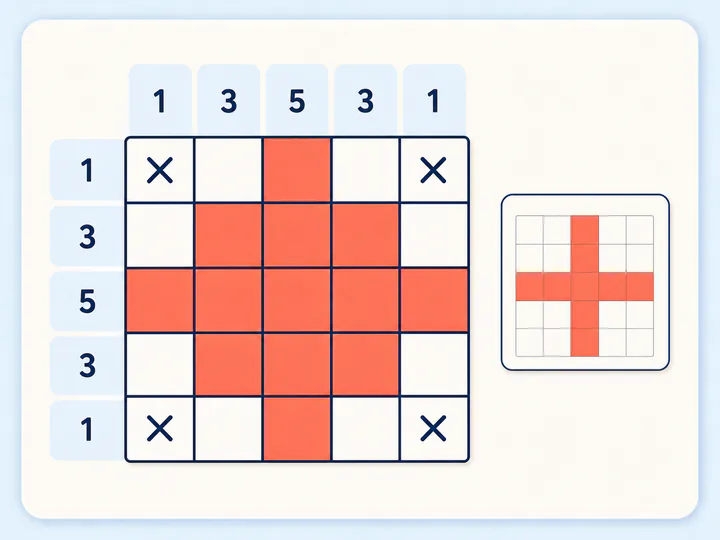
One clue pattern, two directions
Crossing row and column evidence reveals a symmetric picture without guessing.
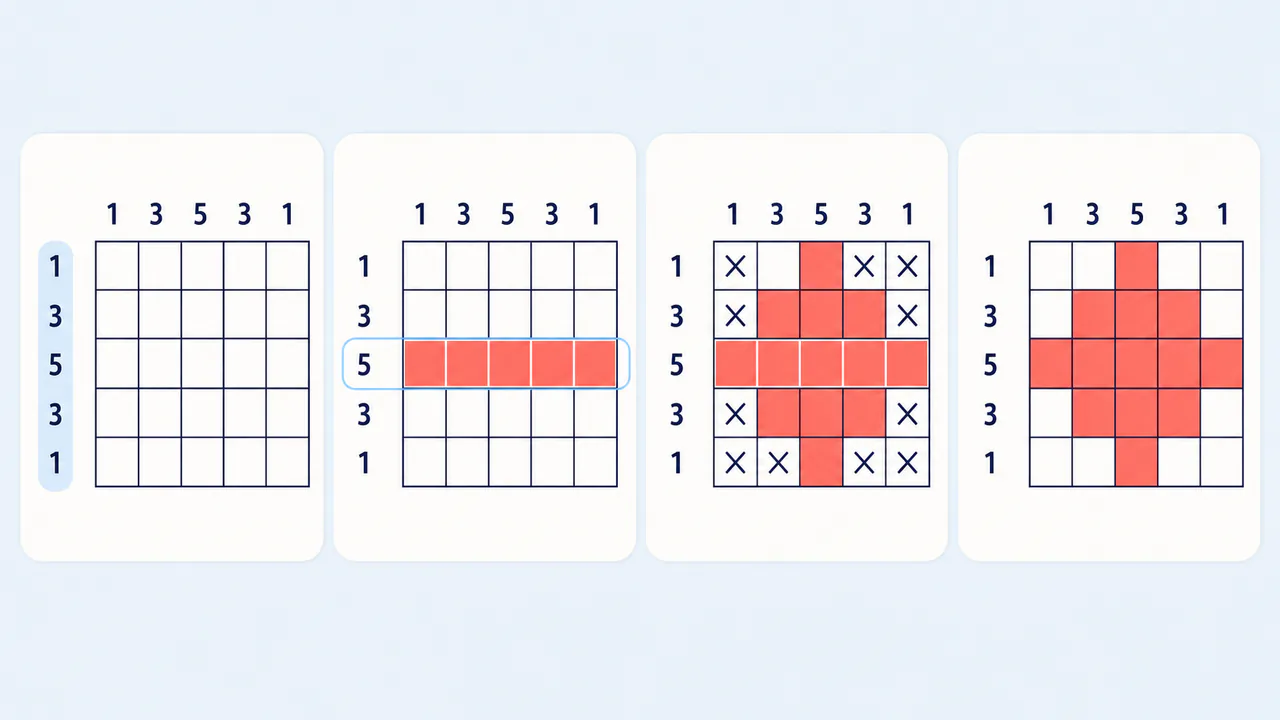
A four-step deduction sequence
Start from a forced line, transfer evidence, record impossible cells with X, and verify the result.
These figures explain the method only. Live puzzles, printable pages, and answer identity continue to come from the canonical Nonogram Definition and Document pipeline.
Choose the right level of support
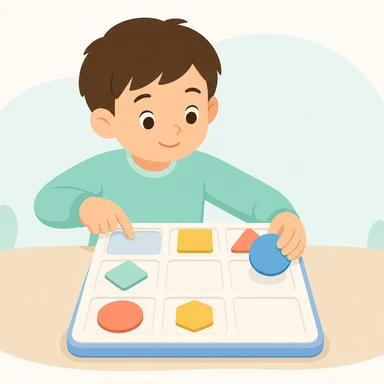
Guided first puzzle
Use the real Guided single preset: one Beginner puzzle, a worked example, fill/X key, and answer page.
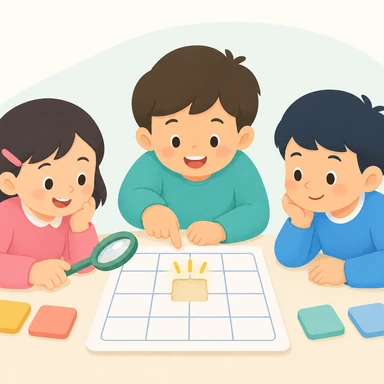
Light-support classroom set
Use the four-puzzle classroom preset for shared reasoning, with readable clues and matching answers.
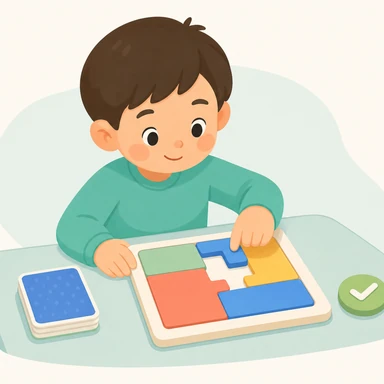
Independent low-ink practice
Use the low-ink homework preset for a same-level four-puzzle set after children understand fill and X.
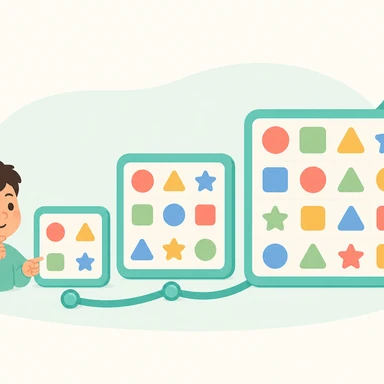
Progressive challenge
Use the progressive preset only with four or more puzzles so the validated 5×5 levels can advance honestly.
Where printed Nonograms fit
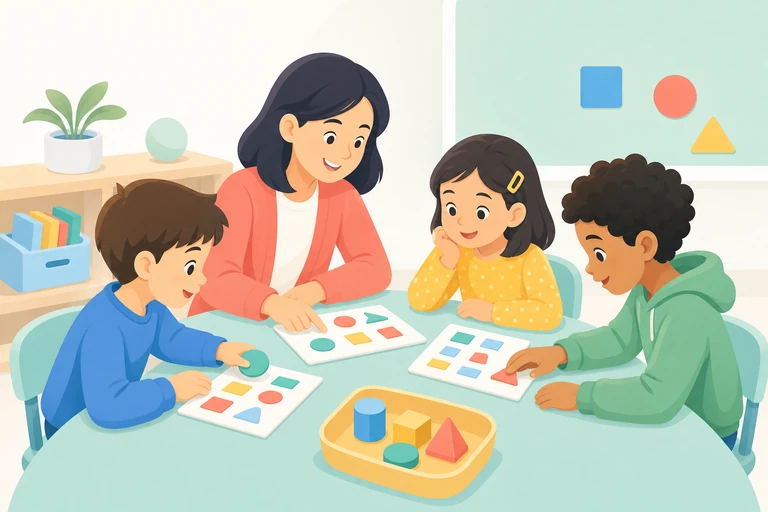
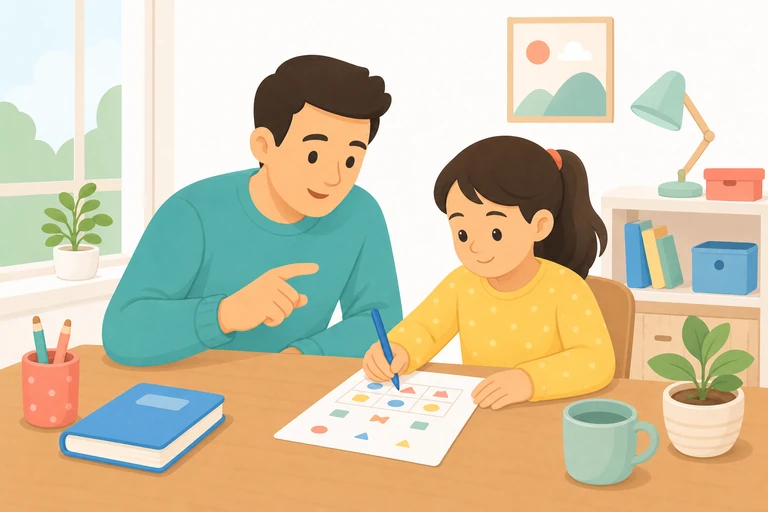

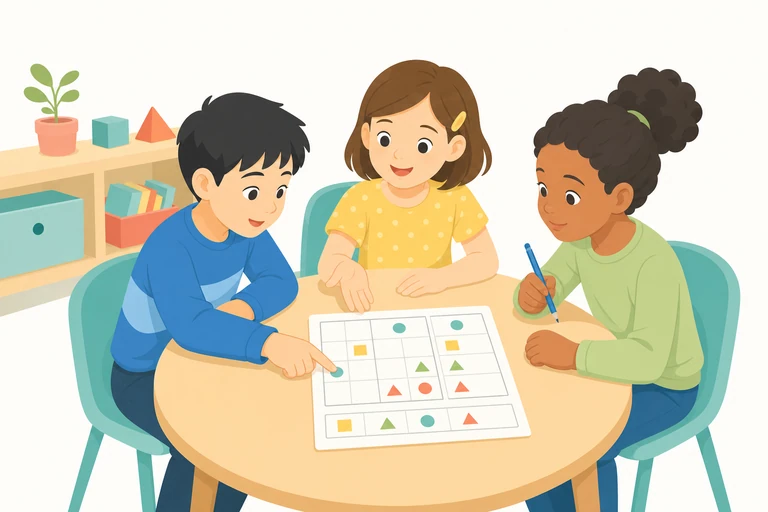
Print for clear, comfortable solving
- Match the paperChoose A4 or US Letter to match the paper already in the printer.
- Choose an ink styleUse color for modelling, or low-ink and line-art for larger practice sets.
- Keep answers separateInclude answer pages when needed, then hold them back until the child has checked independently.
What printed Nonograms practise

Logical reasoning
Turn number clues into small conclusions that build one complete picture.

Visual observation
Scan clue groups, filled runs, and X marks across crossing rows and columns.

Focus and checking
Stay with a compact task and verify each mark before moving on.
Three ways to use the printed page
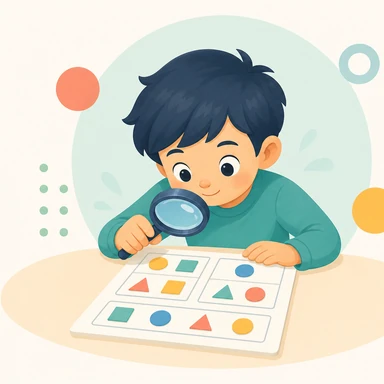
Observe one clue
Point to one row or column and ask what the number guarantees before making any mark.
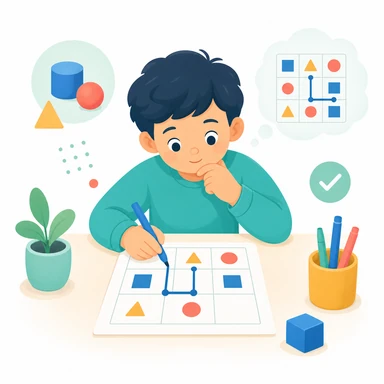
Solve with fill and X
Let the child fill certain squares and mark proven empty squares while explaining each choice.
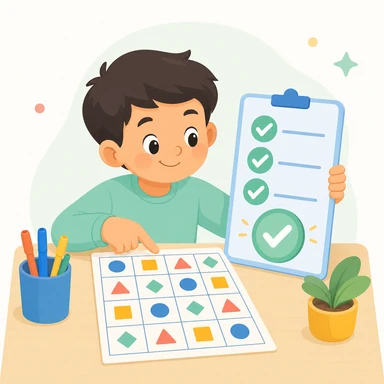
Check and explain
Compare with the answer page, then choose one row and explain why every mark is correct.
Ready to reason?
Create a ready-to-print practice set
Choose the learning goal, inspect the vector pages, then print or save the validated output.
Mini Nonogram questions
What age is Mini Nonogram for?
Does a child need to read words?
Does every puzzle have one answer?
What should we do when stuck?
Can I print more practice?
Are larger grids available?
Continue with logic puzzles
Move from picture clues to other real visual and grid-based reasoning activities.